
Vision For Life

Cataract surgery

What is a cataract?

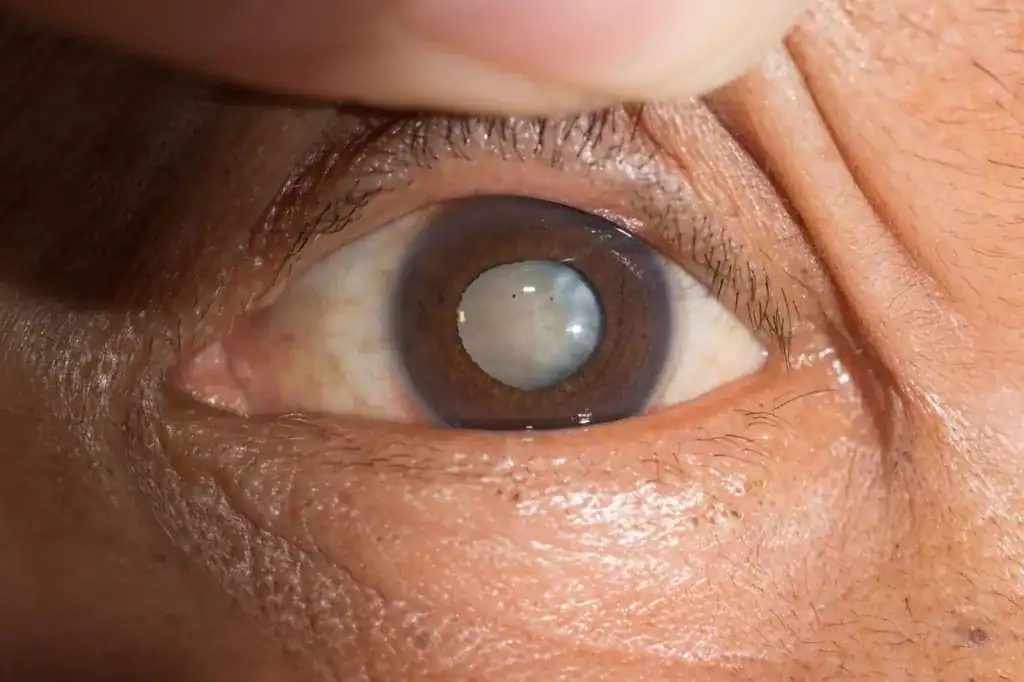
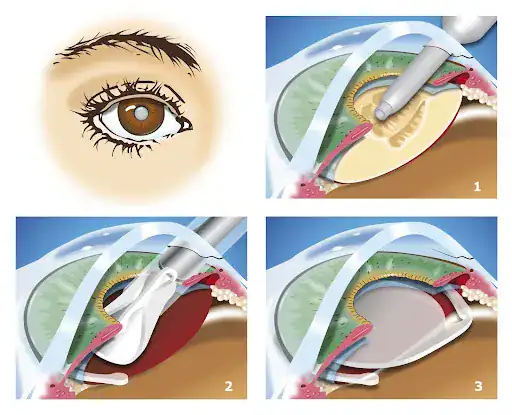
A cataract occurs when the eye’s lens, which is normally clear, becomes opaque. This lens is located inside the eye behind the pupil, where it sits in the lens bag. Cataract causes blurred vision by blocking light as it travels through the eye. It can also change the focal point of the eye, further blurring the vision. Cataract removal surgery is required for cataract treatment.

How is a cataract treated?

The only proven treatment for cataracts is cataract surgery. 

The focusing power of each lens implant is specific to each eye and highly precise measurements are taken of the eye before surgery to determine the exact lens strength for your eye.

cataract3

What will I experience during cataract surgery? Will I feel pain?

At Vision for Life Institute we understand that the thought of eye surgery can make us feel nervous.  Please know that cataract eye surgery is not painful!

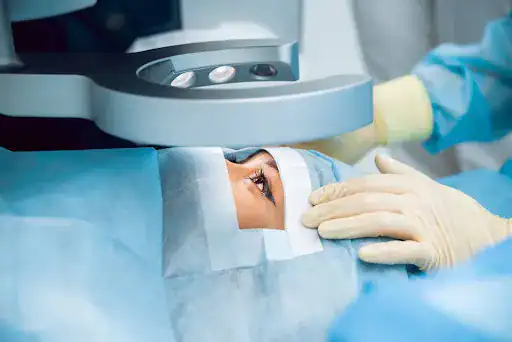
We are able to make sure that you don’t feel pain during your surgery due to modern anaesthetic.  During cataract surgery, local anaesthetic is applied to the eye prior to the eye surgery so no pain is felt. You will feel movement and sometimes some pressure. You are given medication to relax you (sedation) so you are in a “twilight,” but you will be awake. You will be unable to see any of the operating instruments that are used during the cataract surgery.

Our patients frequently comment after the operation is finished that they can’t believe how easy the surgery was for them.

Frequently Asked Questions

At Vision for Life Institute we understand that the thought of eye surgery can make us feel nervous.  Please know that cataract eye surgery is not painful!

We are able to make sure that you don’t feel pain during your surgery due to modern anaesthetic.  During cataract surgery, local anaesthetic is applied to the eye prior to the eye surgery so no pain is felt. You will feel movement and sometimes some pressure. You are given medication to relax you (sedation) so you are in a “twilight,” but you will be awake. You will be unable to see any of the operating instruments that are used during the cataract surgery.

Our patients frequently comment after the operation is finished that they can’t believe how easy the surgery was for them.

cataract3

The degree to which glasses will be required after cataract surgery depends on the type of artificial lens implant used.

There are 4 options:

Option 1: Monofocal artificial lens implant in both eyes.
The traditional approach has been to insert lens implants which provide excellent distance vision in both eyes. It is a very good option for those who wish to have excellent distance vision without glasses but who are happy to wear glasses for near (eg reading) and intermediate distance (eg using computers, reading the dashboard of a car).

Option 2: Multifocal artificial lens implant in both eyes.
Multifocal intraocular lenses provide excellent vision for objects at all distances. They provide excellent distance vision (driving, watching TV), intermediate vision (eg working with computers) and near vision (eg reading tablets, phones, books). They are the lens type which are most likely to result in spectacle independence. In some people multifocal lenses can result in haloes around lights which are most commonly noticed when driving at night. Usually these are very mild. However, in around 1 in 200 cases, haloes can be very troubling to the point where these lenses need to be removed.

Option 3: Extended depth of focus (EDOF) lens implants.
EDOF lenses provide not only excellent distance vision without glasses (eg driving, watching TV), they also provide excellent intermediate distance vision (eg working with computers). EDOF lenses also provide some degree of near vision (e.g. reading tablets, phones, books), although glasses are still required to read small print, particularly under low light conditions. Although the near vision provided by EDOF lenses is not quite as good as that provided by multifocal lenses, it is very rare for haloes to be noticed by patients.

Option 4: “Blended vision” or “monovision.”
In blended vision, artificial lens implants are inserted which result in one eye being focused for distance and the other eye being focused for near. Blended vision significantly reduces the need to wear glasses after cataract surgery. It usually allows people to be glasses-free for most daily activities. Patients may still require glasses for reading very fine print and/or for driving at night. Because one eye is focused for distance and the other for near, it can take the brain a few months to fully adapt to blended vision.

With modern technology and techniques, cataract surgery is usually performed in around 20 minutes.  The total time that patients spend at the hospital is approximately 4 hours which includes time for eye drops to dilate the pupil, time to give the anaesthetic, the surgery itself and time to recover from the anaesthetic.  

After your surgery you will have a post-operative appointment within a few days of your surgery.  At that stage we can advise you whether you can drive or not.  As a rule, you can return to driving within a few days after surgery.

After surgery, eye drops are usually required for 4 weeks. These drops help the eye settle down and recover after surgery.

A dressing is placed on the eye immediately after the surgery. This is usually removed the morning after the surgery at the latest.

It is important not to swim for 1 month after cataract surgery. Light excercise is ok after surgery but bending and heavy lifting is best avoided for 2 weeks after cataract surgery.

In Brisbane, our surgeons operate at EyeTech Day Surgery in Upper Mt Gravatt.
https://curagroup.com.au/hospital/eye-tech-day-surgeries-southside/

In Hervey Bay, we operate at the Hervey Bay Surgical Hospital.https://www.hbsurgical.com

Patients spend approximately 4 hours at the hospital on the day of surgery.  This time includes the time required for eye drops to dilate the pupil, the anaesthetic, the surgery and the recovery from anaesthetic.

The cost of cataract surgery can vary depending on whether you have private health insurance and the type of lens you choose.

If you have private health cover, many people are able to have their cataract surgery with a standard (monofocal) lens at no out-of-pocket cost. If you decide on a premium lens option, such as multifocal or extended depth of focus (EDOF), there may be a smaller out-of-pocket expense.

If you don’t have private health insurance, there are package fees that include the hospital, surgeon, anaesthetist and lens costs. These fees will differ depending on the type of lens chosen.

Please note: surgeries performed in Hervey Bay may include a rural/remote surcharge.

cataract7
Yes.  At Vision for Life Institute, our Doctors routinely perform cataract surgery for uninsured patients.

At Vision for Life Institute, we are able to perform your surgery within as soon as 2 weeks from the time you contact us.  There is no “waiting list.”  We are able to offer all patients, whether they are insured or uninsured, rapid access to their surgery so their sight can be restored and they are able to get on with their lives with excellent vision!

Contact us to book a consultation with one of our expert Ophthalmologists.

You can see a video of cataract surgery here.